
Week 7
Storytelling Basics
Central Theme
The underlying meaning of the story. A story can have both a major and minor theme.
Major Theme: An idea that is intertwined and repeated throughout the whole narrative
Minor Theme: An idea that appears more subtly, and doesn’t necessarily repeat.
Conflict
It is what builds the story. Without conflict, there is no story.
Characters
Each character has a different role. Regardless of how many characters there are, there is always a protagonist and an antagonist.
Central Characters: Vital to the development of the story. The story revolves around them
Protagonist: The main character. They have a goal to accomplish or a conflict to overcome. They must have an emotional involvement from the audience.
Antagonist: They stand between the protagonist and their goal. It can be a person, place, thing, or situation that represents a tremendous obstacle to the protagonist.
3 Act Structure

|
| Figure 1.1. Traditional 3 Acts Structure |
Week 9
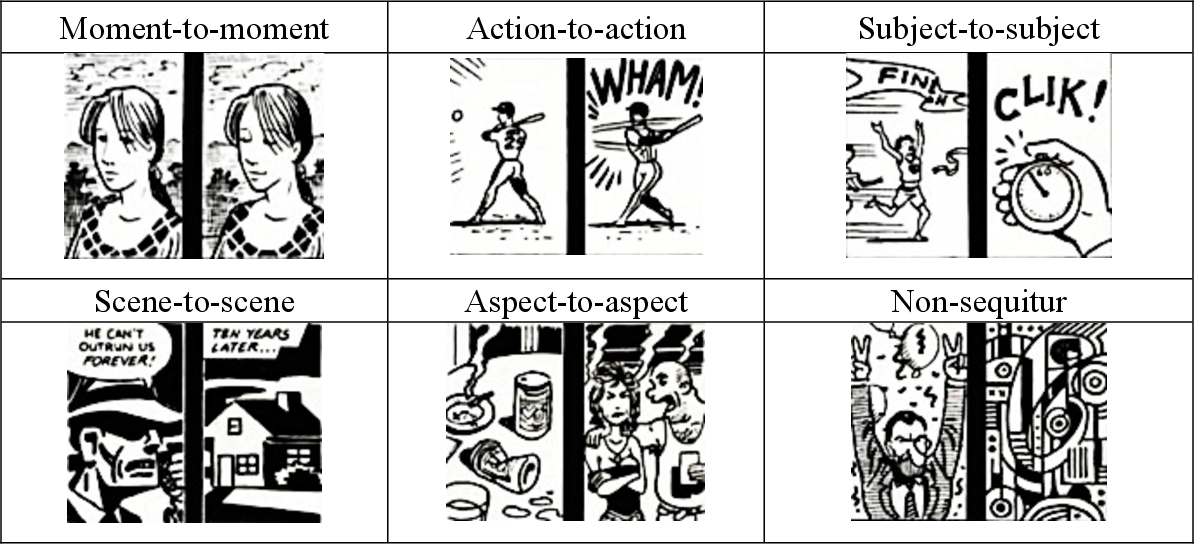
Transitions
|
| Figure 2.1. 6 Panel to Panel Transitions |
Moment to Moment
- Much like a blink between seconds of a film
- It slows down and draws out action
- Shows and captures basic movements
- If overused it will be dull
Action to Action
- Focuses on significant events or movements over larger intervals of time between moments
- Shows progression in a specific scene
Subject to Subject
- A cut between related moments
- Focuses on a different subject in the same scene
Scene to Scene
- Shifts from one space and time to a complete different one
Aspect to Aspect
- Jumps around a scene showing in key details
- Introduces the environment
- Different aspects happening in the same scene
Non Sequitor
- Mostly in surreal abstract or gag comics
- No logical connection between panels
- Readers perceive a narrative between juxtaposed moments or things
Symbolic

|
| Figure 2.2. Example from Deadly Class Comic |
- Oftentimes they are partial montages that depict contents of a flashback or inner dialog
- Moves from an imagined or recalled space either to another or to a real one
Rolling Transitions

|
| Figure 2.3. Example from Apparitions of Killoffer |
- Removes gutters and borders as it melds and mixes scenes together
- The eye moves across the page seamlessly, and finds new moments, aspect or space of the scene
- A rolling sense of movement through space and time in the story
INSTRUCTIONS
Project 3: Web Toon Graphic Novel
Storybuilding Ideas 1
References

|
| Figure 3.1. Archie Comics |
|
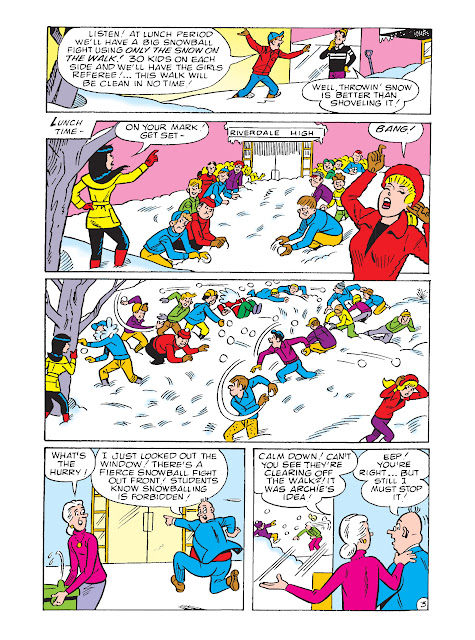
| Figure 3.2. Archie Comics |
Story Ideas 1
Read It Here: My Story Drafts 1
My ideas, poorly written but short and simple drafts. I did not write them following the 3 acts structure as they were ideas I was just tossing around, not knowing if they would work. It was just the beginning of the beginning, where I was pouring ideas out onto the paper, or keyboard, and seeing what I could find. You can read my story drafts in the link above.
I centered most of them around a snowball fight. It was just something I thought of doing when the brief was given. I want to do something soft, sweet and wholesome. I tried approaching the different attempts in different ways and scenarios, but all having a snowball fight.
I thought I should try looking outside the whole 'snowball fight' idea. I thought to myself, it doesn't even have to be humans or realistic. Thus, my Attempt 6 in My Story Drafts. I had an idea with a crow fight but no clue on how to get there. I felt stuck and stared at it for a whole day and a half. Eventually I decided to abandon that idea and moved back to a snowball fight.
I quite liked Attempt 5.1 and decided to expand it, following the 3 act structure. I figured it would be my finalized story. Read Attempt 5.2 below.
Attempt 5.2 and could have been the final story
Once upon a time, there was a young boy, showered with love and adored by his family. He was the center of attention and got everything he wanted. However, that changed when his mom brought his younger brother home. Everyone fussed over this new baby. He tried to get their attention, but they hushed him, ignored him. When his mom showed him his baby brother, he did not understand the big deal. He thought to himself, he isn’t even cute. As time went on, he got less and less attention. He hated it. Eventually, he realized it, he’s got competition.
A few years went by, the younger brother was still the center of attention. He disliked sharing his toys or playing with the younger brother, in general, he did not like his younger brother. He found his brother bothersome and a cry baby. One day, walking home from school with his friends, he saw some kids at the park. He noticed there was a small boy being bullied but did not care much for it. As he got closer, he realized the smaller boy was his brother. He watched, stunned, as the bully pushed his brother down to the snow. Something in him caused him to react, to protect.
He shouts at the bullies and tells them to back off. The bullies turn, smirk, claim they own this park, and he should mind his own business. As the bullies turn back to his younger brother, he hits one of them with a snowball from behind. The bullies turn, he throws another one. As they turn to run towards him. He shouts “NOW!”, he and his friends start throwing snowballs at the bullies. Everyone starts to join in and throw it at the bullies. The bullies are too ambushed to do anything and run away crying. He starts to walk towards the younger brother but slips and falls. His brother, worried, checks on him. Only to be pulled to the ground by him. They laugh and make snow angels.
Storybuilding Ideas 2
References
Story Ideas 2
Read It Here: My Story Drafts 2
Although I found Attempt 5.2 to be cute and wholesome. The story was childish, not something memorable enough. It seems fine for a children's book, but if I were to pick this book up, I would flip through it so fast and at the end it would just be "oh ok thats cute". It wasn't evoking enough emotion to be memorable. I felt that by choosing that story to be my final story, I was simply settling, and that's not something anyone should ever do. So, I decided that I should keep working on storybuilding and create a story that I am truly happy with.
I went back to my high school English Literature days (I know its odd that I took Eng Lit but still cant write but it is what it is). I thought of the short stories I read for English Literature and how I still remember some of the storylines. I don't remember the titles, the authors, or the whole story, but I always remember the concept and small bits and pieces of the story. They were unique, peculiar and carried out some memorable emotions and ideas.
So, I dug up the Cambridge IGCSE English Literature syllabus of 2017. I read through the few short stories that have stuck with me to this day, in order of most memorable to me: Sredni Vashtar by Saki (Hector Hugo Munro); Ming’s Biggest Prey by Patricia Highsmith; Billennium by J. G. Ballard; The Phoenix by Sylvia Townsend Warner. I also watched a few short animated movies on Youtube (Video 1.1. - 1.3.). These stories were touching, heartfelt and wholesome.
From all my research, I was slowly reminded of why these stories were great. They each had a strong major theme and had enough build up around the conflict, which was obviously lacking in my stories. They introduced the major conflict early on and told the story slowly from then on, allowing the build up to actually happen.
I then decided to start from scratch and write on paper instead of the laptop. I went through half a day looking at references and thinking of ideas. I came up blank or unfinished for most part of it. While I was eating dinner, I thought about everything I had read, watched and wrote and slowly a small idea started to form in my head. And eventually, after process of writing and writing, I came up with my story.
You can see the work I did in the link above. However, since I was drafting on paper, it was very messy, especially since my handwriting is garbage. So, I rewrote the storybuilding drafts that were the most important to reaching my final story.
Final Story
Once upon a time, there was a kitten named X (only for narrative purposes), a product from a kitten mill. She was kept in a cage with her mother and some other kittens. A few weeks later, she was rudely separated from her mother and shoved into a different cage by the guy who ran the kitten mill. The human picked her cage up and casually tossed it into the back of his truck. Everything else went by in a blur. Suddenly the lights were bright, some other human was carrying her and before she knew it, she was thrown into a glass box with a few other kittens. She tried escaping a few times, but she was stuck in the glass box with no way out. Every day she would lay by the glass and stare out the window, dreaming of the day she can roam freely.
One day, a kid walks by the window, squeals in excitement and talks to her dad while pointing at X. The shopkeeper then walks to X’s glass box and opens the door. Thinking she can escape, X leaps out, only to get caught and placed into a carrier. After awhile, the carrier door opens, and she walks out. It’s a new place, a small apartment. She sees an open window and makes for a run for it, but the kid catches her and places her in a bathtub. As the kid starts to shower her, the scene changes to X and the kid in a boxing ring. X puts up a good fight but loses. The scene comes back to reality with the kid beaming as X is now clean and smells nice. Once X is back on the floor, she runs for the window she saw earlier, leaps towards it, but it’s closed. She looks out the window and realizes she’s above the ground.
She feels defeated and spends her time staring out the window. Until finally, she realizes a way out by watching the father exit the door and appear out the window. She waits eagerly at door, waiting for it to open again. When it does, she dashes out and for a moment, it feels like she’s won, she’s free but suddenly, she’s caught again, it’s the father. He puts her back in the apartment and she goes back to staring out the window. The kid watches, surprised, and saddened. She picks X up and puts her in the carrier. After awhile, the carrier door opens and X walks out. It’s somewhere new again, a park. X slowly and warily walks further away from the carrier. No one stops her, she speeds up, bouncing with happiness. She slows down and looks back at the kid. The kid gives her a smile and X nods back politely and walks off.
Storyboarding
References

|
| Figure 4.1. Reference for Frame Storyboarding |

|
| Figure 4.2. Reference for Frame Storyboarding |

|
| Figure 4.3. Reference for Frame Storyboarding |

|
| Figure 4.4. Reference for Layout Storyboarding |

|
| Figure 4.5. Reference for Layout Storyboarding |


|
| Figure 4.8. Reference for Layout Storyboarding |
Frame Storyboarding

|
| Figure 5.1. First Frame Sketches |

|
| Figure 5.2. Frame Storyboarding 1.1 |

|
| Figure 5.3. Frame Storyboarding 1.2 |

|
| Figure 5.4. Frame Storyboarding 1.3 |

|
| Figure 5.5. Frame Storyboarding 1.4 |

|
| Figure 5.6. Frame Storyboarding 1.5 |

|
| Figure 5.7. Frame Storyboarding 1.6 |
In Figure 5.1., I thought of a few different ideas and perspectives for my first frame. Most of them were just explorations of different perspectives to set the scene. The top left frame being the most direct with blatantly having the pet store be the only complete and obvious subject in the frame as well as somewhat in the center.
I thought of having a park across the pet shop as it would relate to children, a symbolism to freedom. Freedom being the main theme of my story as it is about a kitten wanting freedom. The top right and bottom left frames are sketches of different perspectives and building design.
The bottom left frame, I thought of trying a more cartoon fantasy adventure style. I felt inspired by some references I stumbled upon in Pinterest and thought I could give it a shot. However, I tried making one house in Illustrator and realised I might not have enough time to make my comic look nice to finish in time. So, I decided to stick with the simpler ones and work with that.
I, then, moved on to storyboarding. I kept everything in a basic rectangle frame for simplicity. From this storyboard, I have 72 panels, however, these are not final as some changes might be made as I go along.
Layout Storyboarding

|
| Figure 6.1. Page 1: Panel 1-2 |

|
| Figure 6.2. Page 2: Panel 3-6 |

|
| Figure 6.3. Page 3: Panel 7-11 |

|
| Figure 6.4. Page 4: Panel 12-20 |

|
| Figure 6.5. Page 5: Panel 21-30 |

|
| Figure 6.6. Page 6: Panel 31-42 |

|
| Figure 6.7. Page 7: Panel 43-54 |

|
| Figure 6.8. Page 8: Panel 55-66 |
I managed to cut down to 66 panels. Most of my references came from the few issues of Deadly Class Comic that I own. It was easier to look at physical references I had instead of online references.
Comic Progression
References
|
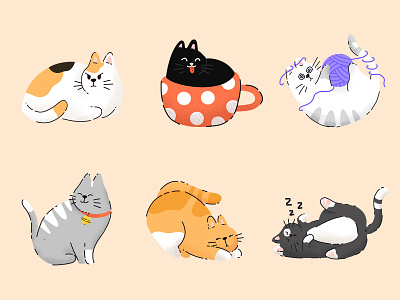
| Figure 7.1. Reference for Cat/X Character |
|
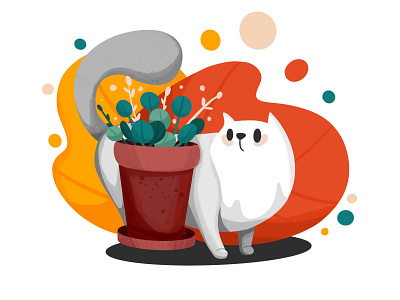
| Figure 7.2. Reference for Cat/X Character |
|
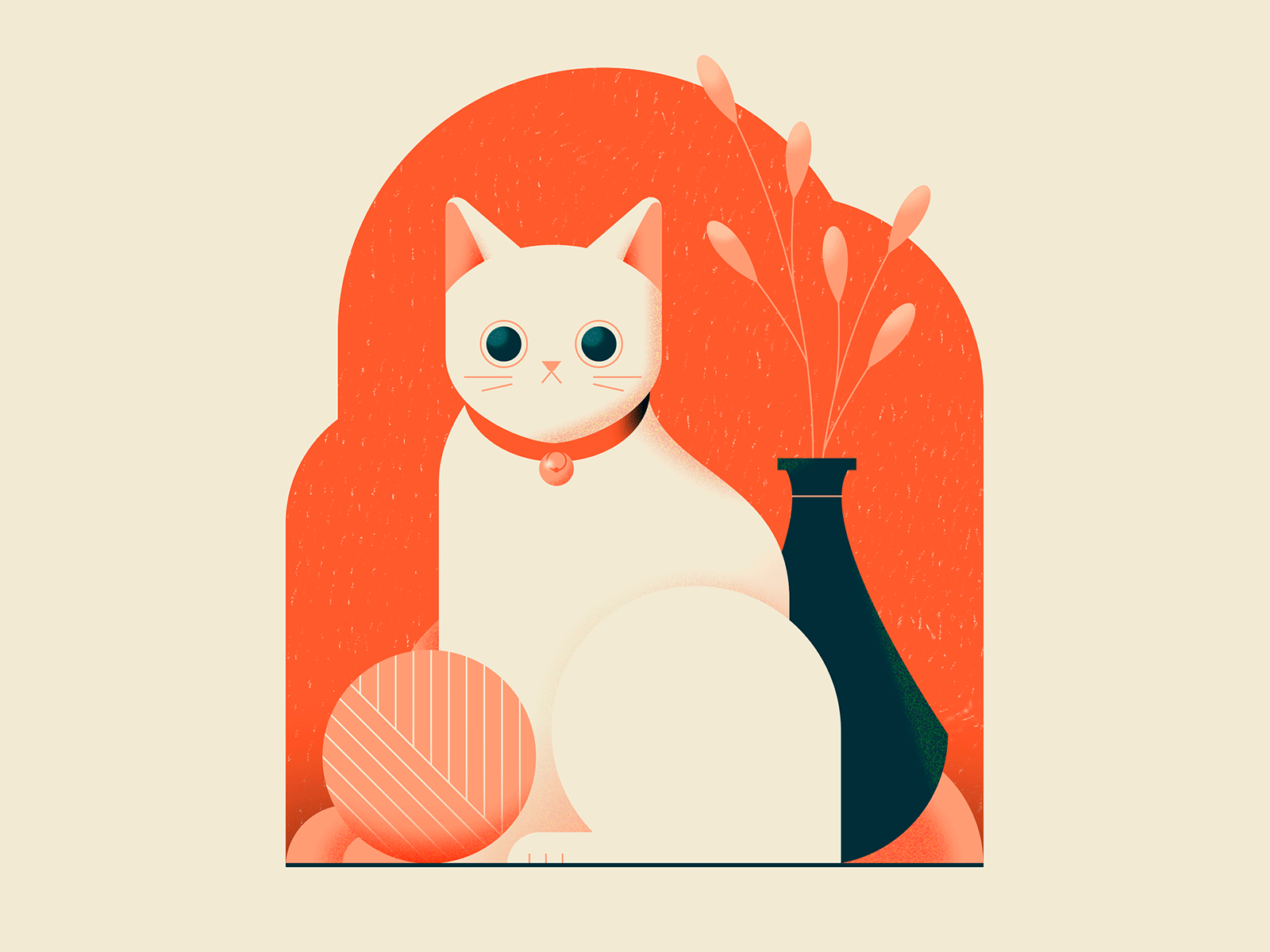
| Figure 7.3. Reference for Cat/X Character |

|
| Figure 7.4. Reference for Little Girl Character |

|
| Figure 7.5. Reference for Art Style |

|
| Figure 7.6. Reference for Art Style |

|
| Figure 7.7 Reference for Art Style |

|
| Figure 7.8. Reference for Art Style & Colour Scheme |

|
|
Figure 7.9. Reference for Art Style & Colour Scheme |
|
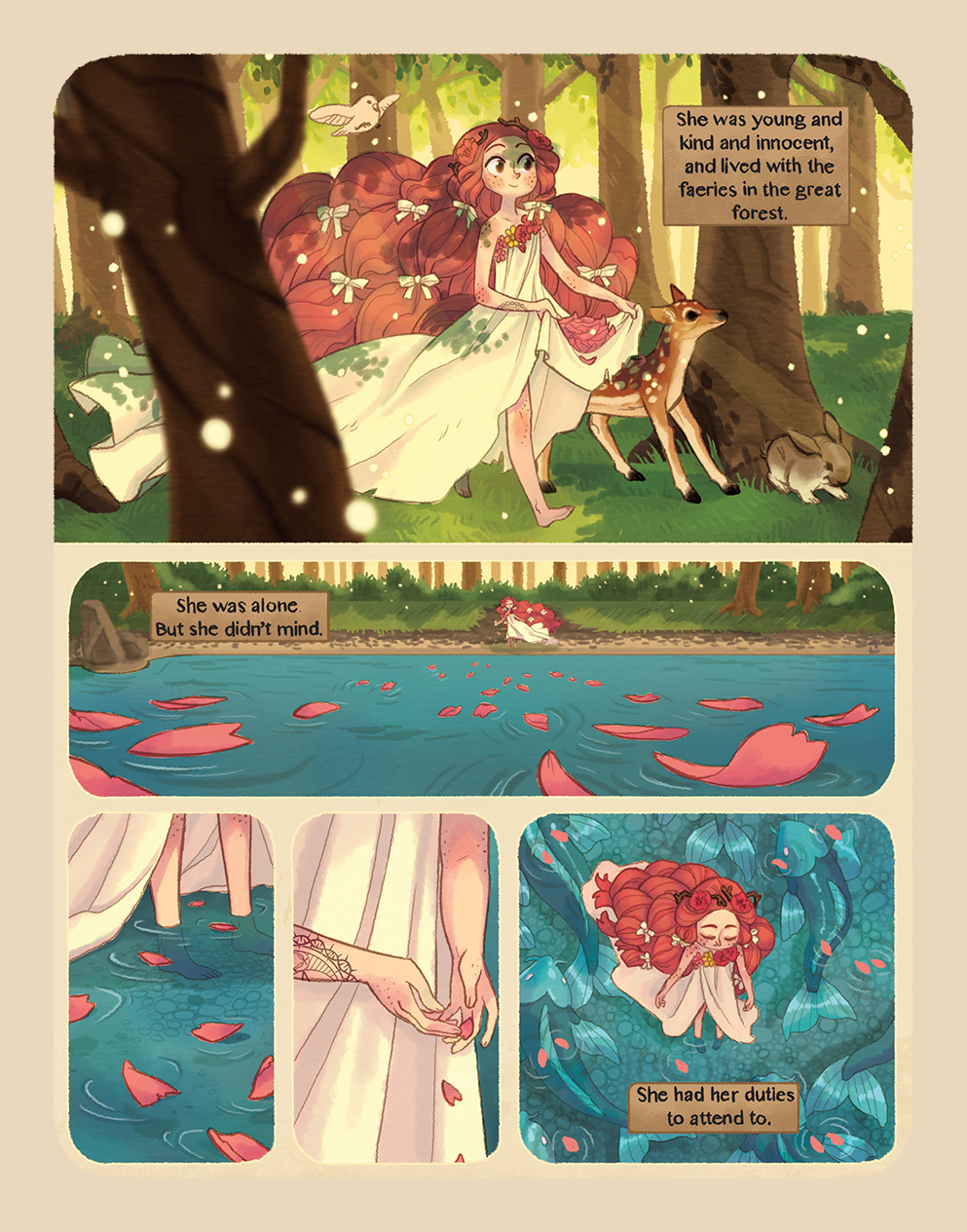
| Figure 7.10. Reference for Art Style & Colour Scheme |

|
| Figure 7.11. Reference for Colour Scheme |
Colour Tests

|
| Figure 8.1. Colour Test 1.1 |

|
|
| Figure 8.2. Colour Test 2.1 |

|
| Figure 8.3. Colour Test 3.1 |

|
| Figure 8.4. Colour Test 3.2 |

|
| Figure 8.5. Colour Test 3.3 |

|
|
Figure 8.6. Colour Test 4.1 |

|
| Figure 8.7. Colour Test 4.2 |

|
| Figure 8.9. Colour Test 6.1 |
 |
| Figure 8.10 Colour Test 7.1 |
I tried alot of different colour schemes. Most of them were quite an eye sore as I was not pairing them up right. Somehow the only decent looking ones were Colour Test 1.1, 2.1 and 6.1. I was advised to go with Colour Test 6.1.
Progression
Set 1 (Pages 1-4)
Set 2 (Pages 1-5)
Set 3 (Pages 1-7)
Set 4 (Pages 1-8)
Set 5 (Pages 1-8)
Every now and then, as I was going, I would go back to previous panels to make a few changes. Things that only caught my attention later, or things I thought of changing (layers were placed wrongly, a colour change, text change, etc.). So, everytime I finished a full page, I would export my progress for documentation purposes. Set 4 is the only set with an incomplete page because thats where I stopped for the day and I knew I would make alot of changes the next day.
Close Ups

|
| Figure 9.1. Tale of Two Kittens |

|
| Figure 9.2. The Little Girl |

|
| Figure 9.3. X's Two Emotions |

|
| Figure 9.4. X Fights |

|
| Figure 9.5. Cute Snippets |
Just a bunch of close up shots of some things that might go unnoticed and also because Im pretty happy with the outcome of my work.
Final Outcome
A Cat-astrophe
Webtoon Link: webtoons.com/a-cat-astrophe
FEEDBACK
Storybuilding Ideas 1
- Stories seem very childish and anticlimactic
- Look at more references
- Try write about something personal to myself
- Think of the characters and what progression they have first, then the setting
Storybuilding Ideas 2
Final Story
- Its better than the last as it has proper build up and fails and more build ups
- Has more emotional involvement
Comic Progression
Colour Tests
- Dont use too many strong and bright colours, or too many dull colours
- Have 3 main colours, then just shades, tints and such
- Try use harmonious colours
- Colour Test 6.1 looks better than the others
- Dont use too many strong and bright colours, or too many dull colours
- Have 3 main colours, then just shades, tints and such
- Try use harmonious colours
- Colour Test 6.1 looks better than the others
REFLECTION
Experience
This assignment was quite stressful for me as I have never been very good with telling stories, let alone creating a story. I struggled with alot of past memories of poor story telling/graphic novel work while doing this assignment. However, it was only motivation for me to work harder and achieve an outcome I am truly content with.
Observations
I know that my skills of story telling and writing are not strong but I know it is no excuse to give up. I refused to let my fear and negativity hold me back and I kept pushing myself to keep working on it. Although past poor memories came up, I took them as lessons and constantly asked my friends and sisters for feedback. I realised I have a hard time working with colours and it is something I will need to work on in the future.
Findings
I need to keep failing in order to be better at something, which means I need to feel comfortably not being good at something. I will need to keep trying and never give up. I realised that I should not let bad memories cloud my judgement and hold me back. I need to use them as tools to further improve myself. This assignment has been the most rewarding one in a long time as it is work that I am truly happy with. It was a challenging experience that changed the way I look at myself and storytelling.
FURTHER READING
Backyard Sidekick (n.d.) How to Win a Snowball Fight Every Time: Tactics Guide [Online] Available at: https://backyardsidekick.com/how-to-win-a-snowball-fight-every-time-tactics-guide/
Cambridge International Examinations (2015) SYLLABUS: Cambridge IGCSE Literature (English) 0486 [Online] Available at: https://www.cienotes.com/wp-content/uploads/2018/07/203901-2017-2018-syllabus.pdf
Do, C. (2019) How To Make Your Own Colour Palette [Online] Instagram. Available at: https://www.instagram.com/p/B5EhopYlkWB/?utm_source=ig_web_copy_link
Kittlestad, K. (n.d.) Examples of Theme in Literature [Online] Your Dictionary. Available at: https://examples.yourdictionary.com/reference/examples/examples-of-theme-in-literature.html
McDonald, B. (2009) How to Make the Perfect Snowball [Online] The Guardian. Available at: https://www.theguardian.com/uk/2009/feb/02/how-to-make-perfect-snowball
So You Want To Write (2008) The Top 10 Tips For Writing Great Short Stories [Online] Available at: https://soyouwanttowrite.org/blogs/syww/the-top-10-tips-for-writing-great-short-stories
Comments
Post a Comment